

Explore Botswana


Botswana is an incredibly diverse wilderness destination promising the most unique experiences in Africa.
A breathtaking destination, Botswana is wild and unspoilt, with a wealth of game viewing opportunities – from ‘mokoro-ing’ (canoeing) along the winding waterways of the Okavango Delta, watching the great herds of elephant swim across the mighty Chobe River, to witnessing spectacular predator action, and quad biking across the wide open salt pans.

Botswana is an incredibly diverse wilderness destination promising the most unique experiences in Africa.
A breathtaking destination, Botswana is wild and unspoilt, with a wealth of game viewing opportunities – from ‘mokoro-ing’ (canoeing) along the winding waterways of the Okavango Delta, watching the great herds of elephant swim across the mighty Chobe River, to witnessing spectacular predator action, and quad biking across the wide open salt pans.
Botswana is an incredibly diverse wilderness destination promising the most unique experiences in Africa.
A breathtaking destination, Botswana is wild and unspoilt, with a wealth of game viewing opportunities – from ‘mokoro-ing’ (canoeing) along the winding waterways of the Okavango Delta, watching the great herds of elephant swim across the mighty Chobe River, to witnessing spectacular predator action, and quad biking across the wide open salt pans.
Inspirational Trips
Northern Botswana Cycling Safari
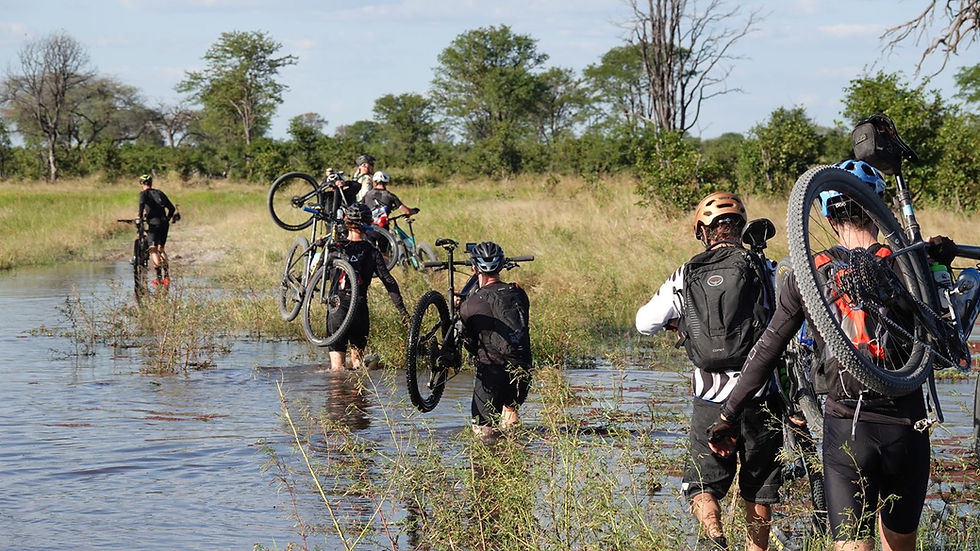
Guided Cycling Safari from Maun to Makgadikgadi
From US$ 6,850 per person (Group 4 - 5 pax)
Destinations in Botswana
Okavango Delta

Whether you aim to ride alongside competitors or cheer from the sidelines, we will arrange the logistics to make your experience smooth and enjoyable.
Chobe National Park

Explore sporting events that align with your interests, allowing you to engage in activities while traveling through Africa’s beautiful regions.
Makgadikgadi

Tailor your journey to include participation in prominent events, ensuring you have a fulfilling and exhilarating experience throughout your travels.
You can check if you require a visa for Botswana at their evisa link here : https://evisa.gov.bw/#/
All visitors must hold a passport valid for 6 months. Most nationalities visiting Botswana do not need a visa to visit Botswana for up to 90 days.
Botswana does not require any immunisations. If travelling from a country where yellow fever immunisations are required visitors will need to produce a yellow fever inoculation certificate.
Malaria is present in most of Botswana and it is advised, although not mandatory, to take antimalarials. The most recent malaria risk area map found at this link : https://travelhealthpro.org.uk/country/33/botswana#Malaria
Accessing Botswana is usually by regional flight with standard baggage allowance restrictions, however once in Botswana the transfer to your destination will determine your final luggage restriction.
Getting around Botswana is predominantly by scheduled seat in aircraft charter flights which have strict limitations and restrictions for luggage style and weight. If you are travelling to Botswana pack away the hard shelled cases and opt for a duffel bag on wheels.
Johannesburg International Airport requires that all bags have at least one hard side. The size of the bag is important, however more so the weight. Most small flights will only allow a maximum of 20kg (around 44 pounds) checked and hand luggage combined. Safari travellers should aim for one medium sized soft checked bag and one carry backpack or handbag that can fit on their lap. There is no overhead storage for additional carry on luggage on safari flights.
Domestic and regional flights differ as they do allow checked luggage and two pieces of hand luggage, in most instances. Although our advice is to stick to the strictest luggage rules on your itinerary throughout.
Most lodges and hotels offer overnight laundry facilities to assist with the strict packing limitations, so no need to bring changes of clothes for every day. There is no dress code at the lodges to allow for more packing space. Basic toiletries are also provided at all hotels and lodges.
Recommended Gear Packing List :
●Camera with charger and additional memory sticks
●Travel Power Adaptor
●Mobile phone & charger (ask your service provider about international roaming)
We do suggest you travel with a small pair of binoculars if you are going on extensive safari. Most game drive vehicles will have at least one pair to share among all guests on the vehicle.
Tablets are also useful for downtime between activities or during travel, for reading or watching downloaded programs. Remember to pack yours in if you wish, including charger and headphones.
Note on wifi at lodges - wifi is often supplied via satellite or routed to the lodge and can be intermittent. It may also be restricted to either lounge or room only. Mobile phone signal in most remote regions is also generally quite limited.
Recommended Toiletries & Medical Kit List :
-
Basic First Aid Kit - most hotels and lodges will carry an extensive first aid kit, however we recommend a small personal kit with plasters, antiseptic wipes, antihistamine cream etc.
-
Basic Medication - hotels and lodges are not able to issue any medication to guests. Please do bring painkillers, anti inflammatories, anti nausea etc
-
Hotels and Lodges will provide basic toiletries including bodywash, soap and shampoo. Lodges will usually also supply insect repellent. When considering toiletries only pack basics such as toothpaste or hair conditioner to save on luggage space and weight. A high protection sunblock is necessary in both winter and summer in Africa.
What to pack on safari :
Multi pocket jackets in safari khaki, trousers that zip off at the knee, gaters and sun hats with insect screens are not essential for your safari stay, unless you absolutely love them. Do keep colours neutral if you are planning on participating in any bush walks, otherwise pretty much anything goes on the back of a game drive vehicle. We do recommend steering clear of very bright colours, red in particular.
For any walking safaris you will be required to wear neutral colours, which also does not include white. You will need to wear long trousers, preferably tapered, and comfortable walking shoes and socks. You need not bring hiking boots, trainers will suffice. However hiking boots are a bit more sturdy on uneven terrain.
Any seasoned safari traveller will tell you that layering clothing is key, as temperatures can vary throughout the seasons and throughout the day. Choose light cotton where possible and remove layers as the day heats up, or add as the evening cools down. Light long sleeves and light cotton long trousers protect from the harsh sun in summer, although remember to pack high protection sunscreen when you feel like enjoying the drive in shorts and tshirts.
We recommend a good quality lightweight windproof jacket for winters on game drives, and for summer a lightweight rain jacket for the short afternoon showers will suffice. Most lodges will supply ponchos for summer rainfall.
Wind chill is the biggest contributing factor to the temperature & comfort on game drives, and more so in winter than in summer. You will get by with a great windproof jacket and gloves in winter instead of a bulky jacket that does not protect from the wind.
Always pack a hat, in both summer and winter. In winter add a warm scarf and windproof gloves, and a woolen cap if you feel so inclined. Again lodges will supply additional blankets on game drives in winter. Tip : pack in an extra pair of sunglasses!
There is generally no dress code at meal times at lodges, guests are most welcome to wear safari clothing to dinner. Remember to pack shoes in for walking around the lodge
Rough guide to packing for safari :
Ladies :
WINTER/AUTUMN (April to September)
3 x T-Shirts
2 x Long Sleeved Shirts
1 x Soft Shell or Fleece Jacket
1 x Windproof Jacket
2 x Lightweight Shorts or Trousers
2 x Jeans or Thicker Trousers Sandals
Trainers or Lightweight Boots
Windproof Gloves
Woolen Hat & Scarf
SUMMER/SPRING (October to March)
3 x T-Shirts
2 x Long Sleeved Shirts
1 x Lightweight Rain Jacket
3 x Lightweight Shorts or Trousers
1 x Summer Dress
Trainers or Lightweight Boots
Sandals
Swimming Costume
Sun Hat
Gents :
WINTER/AUTUMN (April to September)
3 x T-Shirts
2 x Long Sleeved Shirts
1 x Soft Shell or Fleece Jacket
1 x Windproof Jacket
2 x Lightweight Trousers or Shorts
2 x Jeans or Thicker Trousers
Trainers or Lightweight Boots
Windproof Gloves
Woolen Hat & Scarf
SUMMER/SPRING (October to March)
3 x T-Shirts
2 x Long Sleeved Shirts
1 x Lightweight Rain Jacket
3 x Lightweight Shorts or Trousers
Safari Hat or Cap
Sandals
Trainers or Lightweight Boots
Swimming Costume
-
In Botswana the power plugs and sockets are of type D, G and M. The standard voltage is 230 V and the standard frequency is 50 Hz.
https://www.power-plugs-sockets.com/botswana/
Note on wifi at lodges - wifi is often supplied via satellite or routed to the lodge and can be intermittent. It may also be restricted to either lounge or room only. Mobile phone signal in safari regions is also generally quite limited.
The currency in Botswana is the Pula (P) which is made up of 100 Thebe. However visitors may use US Dollars, Pound Sterling, Euro and South African Rands as currency. All these will be accepted for purchases and gratuities although guests can expect to receive change in local currency.
Due to the erratic nature of mobile and satellite communications signal lodges in remote regions of Botswana may struggle with credit card transactions. It is advisable to travel with enough cash for gratuities and small incidentals. However do check with the camp manager as they are generally always able to assist with any larger transactions. ATMs can be used in Botswana, but will only give Pula as currency
When withdrawing from any ATM do not allow anyone to approach and offer assistance. Never let anyone see your pin or try to remove your card from the ATM.
Gratuities are always at your discretion and are appreciated for good service. Gratuities are generally not included in any bill, however do always check your bill prior to paying as a handful of restaurants to levy a service charge for larger tables or during peak days.
Below is a rough guide to tipping in Botswana, and shown as per couple :
Transfer or Uber
R20 to R50 depending on distance (around $1 or €1)
Tour Guide
Half Day – R200 (around $10 or €10)
Full Day – R400 (around $20 or €20)
Hotel or Lodge General Staff
R250 per day (around $15 or €15) mid range hotels/lodges
Field Guide at Lodge
R400 per day (around $20 or €20) mid range lodges
Tracker at Lodge
R200 per day (around $10 or €10) mid range lodges
Gratuity at Restaurants or Bars
10-15% of total bill
It is vital that all travellers to Africa take comprehensive travel insurance to cover for trip cancellation or curtailment as well as medical expenses. Most lodges will charge up to full cancellation for any trips cancelled between 30 and 60 days prior to travel, hotels are more lenient but may still charge a cancellation fee. Airlines will also charge cancellation fees on booked tickets and rebooking/rerouting fees.
Seasons :
Summer - December to February
Autumn (Fall) - March to May
Winter - June to August
Spring - September to November
Botswana has a semi-arid climate remaining hot and dry for most of the year barring the summer months which bring erratic and unpredictable rainfall. The heaviest rainfall can be expected in January and February, and in travel terms these months are described as Green Season months. Day temperatures are fairly warm throughout the year, and in the height of summer can reach over 40°C (approx 100°F). In winter the days are mild and warm, however due to lack of cloud cover night temperatures can drop to below freezing.
There are a few anomalies to note for the safari visitor to Botswana. The rainfall in Botswana does not directly impact the levels of water in the Okavango Delta. These are filled by catchment water collected in Angola during their rainy season. Ultimately water levels in the Okavango Delta start to rise around June during the driest months, and start to recede just before the rains in November. This impacts activities at the lodges as low water levels may put a halt to boating or canoeing activities at certain camps. However there are camps that offer permanent water sources which will still allow for these activities even during green season.
In the dry season the Makgadikgadi Salt Pans are accessible and open themselves to a host of interesting activities such as quad biking or sleeping on the pans under the stars. However in the rainy season this area turns lush and green inviting thousands of migrating zebra and subsequent predator action.